> For the complete documentation index, see [llms.txt](https://docs.helpyousponsor.com/guides/llms.txt). Markdown versions of documentation pages are available by appending `.md` to page URLs; this page is available as [Markdown](https://docs.helpyousponsor.com/guides/core-features/recipient-management/recipients-table.md).

# Recipients Table

Use the Recipients table when you need to review the people or records in a sponsorship program, check sponsorship status, update recipient details, change the table view, export recipient data, or work with records in bulk.

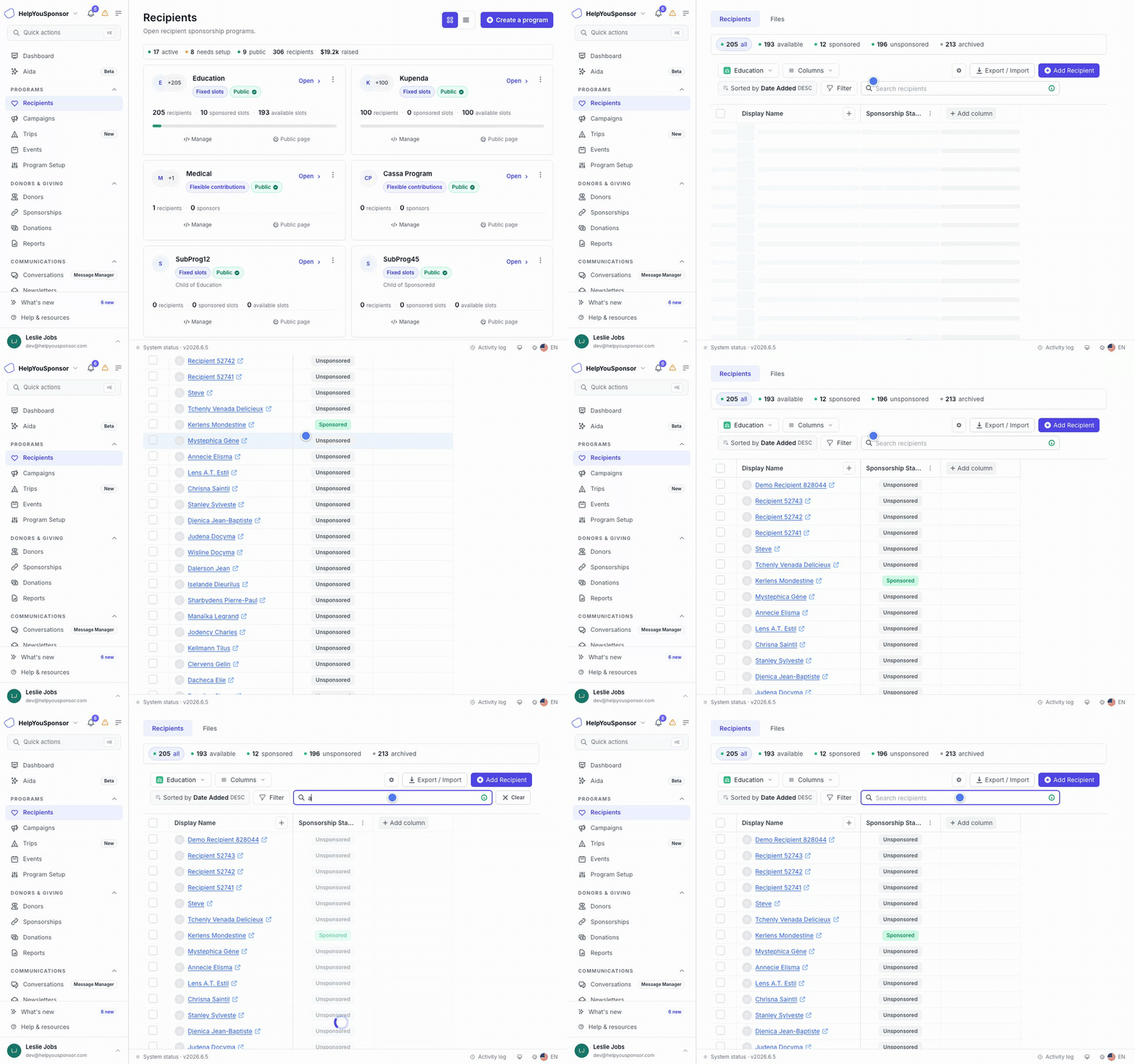
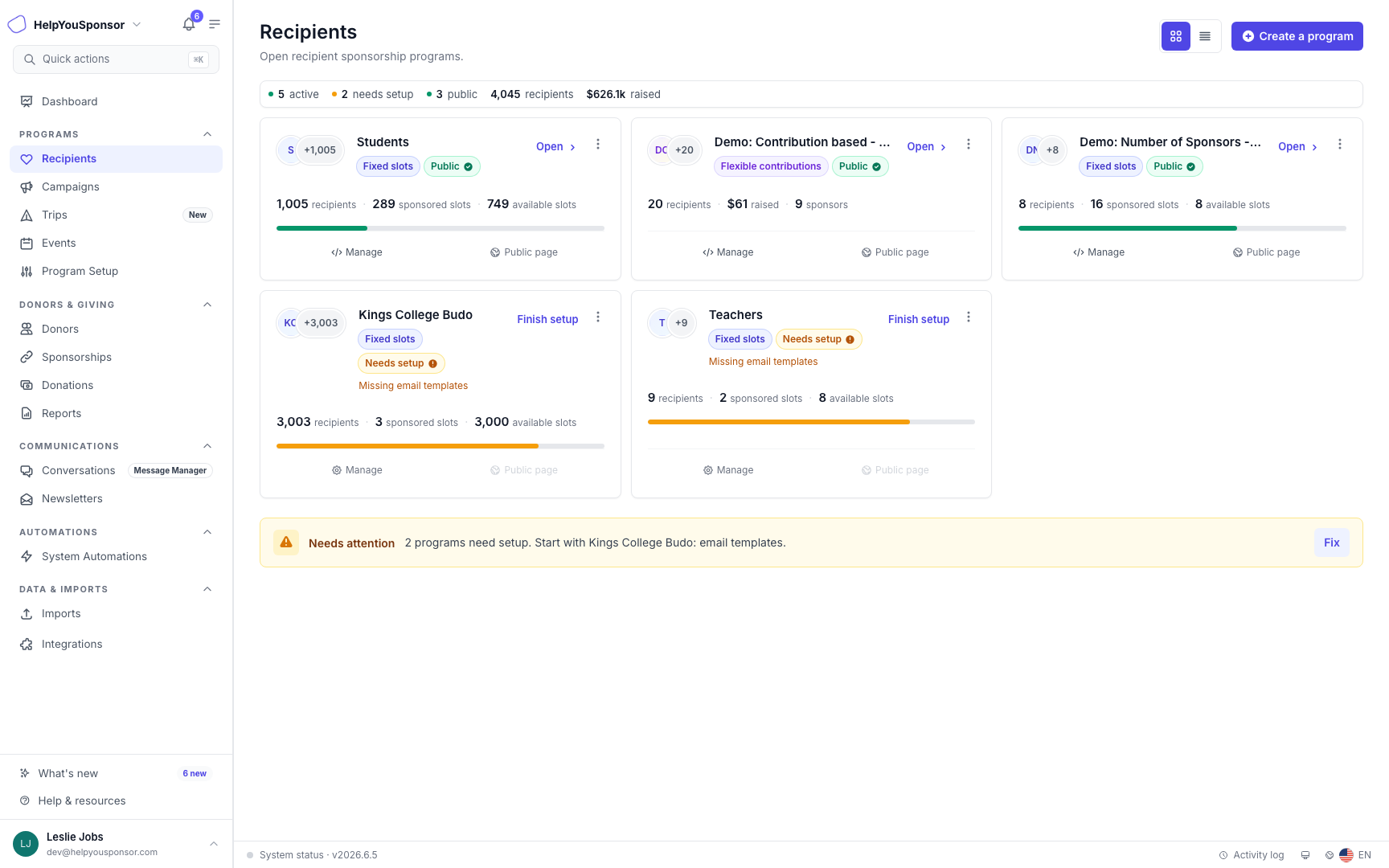
Start from **Recipients** in the sidebar. The first page shows the recipient programs your role can access. Choose the program you want to work on, then select **Open**. Some older or list-style views may call this action **View Recipients**.

<figure><img src="/files/yVDXURV42u9Pr3wyC1fh" alt=""><figcaption><p>The Recipients overview helps you choose the program whose recipient records you want to manage.</p></figcaption></figure>

<figure><img src="/files/5zePpIQNFVIi8IDrDRZ1" alt="Animated walkthrough of the recipients table"><figcaption><p>Walkthrough: opening a program and reviewing its recipients.</p></figcaption></figure>

## Choose the Program You Want to Work On

Each program card shows the program name, setup status, public page status, and recipient or slot counts. Use this overview when you are trying to answer, "Which program's recipients do I need to manage?"

Program cards can include:

* **Open** to work with the recipients in that program.
* **Manage** to update program setup when your role allows it.
* **Public page** to review the donor-facing program page.
* **Finish setup** when a program still needs required setup steps before recipient work is ready.

The overview may also show a list view toggle, a **Create a program** button, and an attention message for programs that need setup.

## Read the Recipients Table

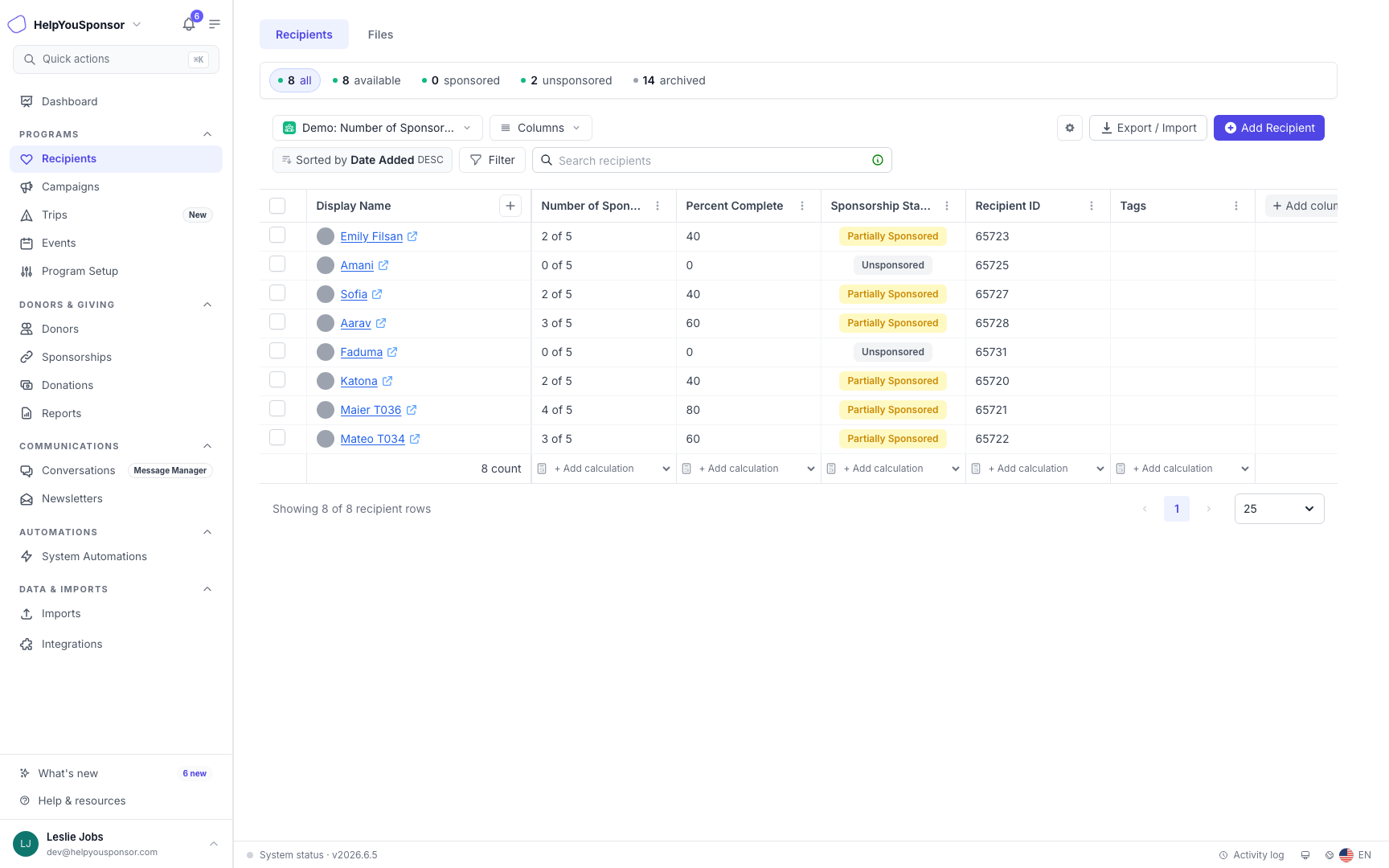
Each row represents one recipient in the selected program. The table columns come from the recipient form and from system fields such as sponsorship status, recipient ID, tags, dates, and sponsorship counts.

<figure><img src="/files/zjJ5YO0CyUWRpugsaVwr" alt=""><figcaption><p>The Recipients table shows recipient records, sponsorship status, and program-specific fields in one worksheet-style view.</p></figcaption></figure>

Use the table to:

* review recipient names and key program fields
* sort records by supported column headers
* open a recipient record from the name or row action
* change page size or move through pages when the program has more records
* add columns that help answer the question you are working on

The table may look like a newer worksheet or a classic table depending on your account settings. The same recipient records are used in both experiences.

## Review Sponsorship Status

Use the status counts above the table when you need to narrow the records by sponsorship state.

* **All** shows the program's visible recipient set.
* **Available** shows recipients available for sponsorship.
* **Sponsored** shows recipients with active sponsorship coverage.
* **Unsponsored** shows recipients without current sponsorship coverage.
* **Archived** shows recipients that have been archived.

Selecting a status count updates the table. If you are using filters or a saved view, the table keeps that context where the current view supports it.

## Search and Filter Recipients

Use **Search recipients** when you need to quickly find a recipient by visible or searchable fields in the current table view.

Use **Filter** when you need a more specific list, such as recipients with a certain status, tag, field value, blank field, or date-based condition.

<figure><img src="/files/35gguy2FWjk4T7pGDG1h" alt=""><figcaption><p>Filters help you narrow a recipient program by field, comparison, and value.</p></figcaption></figure>

To filter recipients:

1. Select **Filter**.
2. Choose the field you want to use.
3. Choose the comparison when the filter asks for one.
4. Enter or select the value.
5. Apply the filter.

Active filters affect the table, exports, and saved views when those tools are available in your account.

## Save Views and Choose Columns

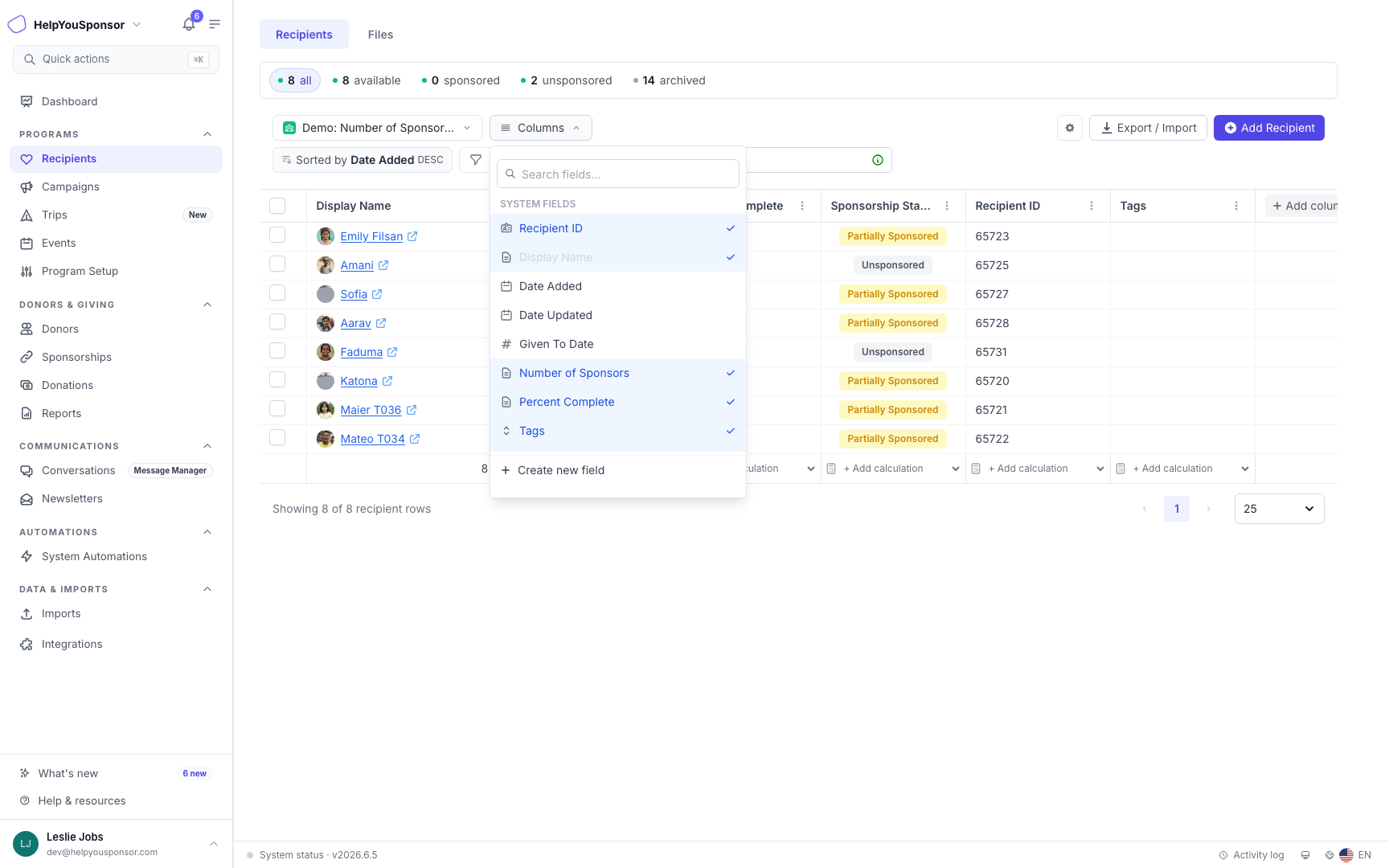
Use **Columns** when you want the table to show the fields that matter for your current task without changing the recipient form itself.

<figure><img src="/files/C6XtTanys6sfRC20Grp4" alt=""><figcaption><p>The Columns menu controls which recipient and system fields appear in the table.</p></figcaption></figure>

You can add or hide columns, and some worksheet views let you reorder columns directly from the table header. If you see a program or saved-view selector, use it to switch between programs, archived recipients, and saved recipient views.

Save a view when you want to reuse a combination of:

* visible columns
* column order
* sorting
* filters
* the selected program context

Use **Manage Form** only when you need to change the fields your team collects for recipients. Managing the form changes the data structure for the program; choosing columns only changes the table view.

## Export or Import Recipients

Use **Export / Import** when you need a CSV of recipient records for reporting, sponsorship management, or offline analysis.

1. Confirm the active program, view, columns, search, and filters.
2. Select **Export / Import** and choose your option:
   * **Current page CSV** — downloads the rows currently shown on the page.
   * **All as CSV** — starts a background export of all recipients matching the current view.
   * **All sent to email** — starts a background export and emails a download link when ready.

Exports follow the current program, search, filters, sorting, and selected columns. Large exports are prepared in the background. A progress section appears at the top of the page while processing and provides the download when ready.

Imports are available when your role and the active program support recipient import. The import flow provides recipient CSV templates and samples before you continue into mapping and review.

## Add or Update Recipients

Use **Add Recipient** when you need to create a new recipient in the selected program. The fields in the add form come from that program's recipient form. See [Add Recipient](/guides/core-features/recipient-management/add-recipient.md) for the full add-recipient workflow.

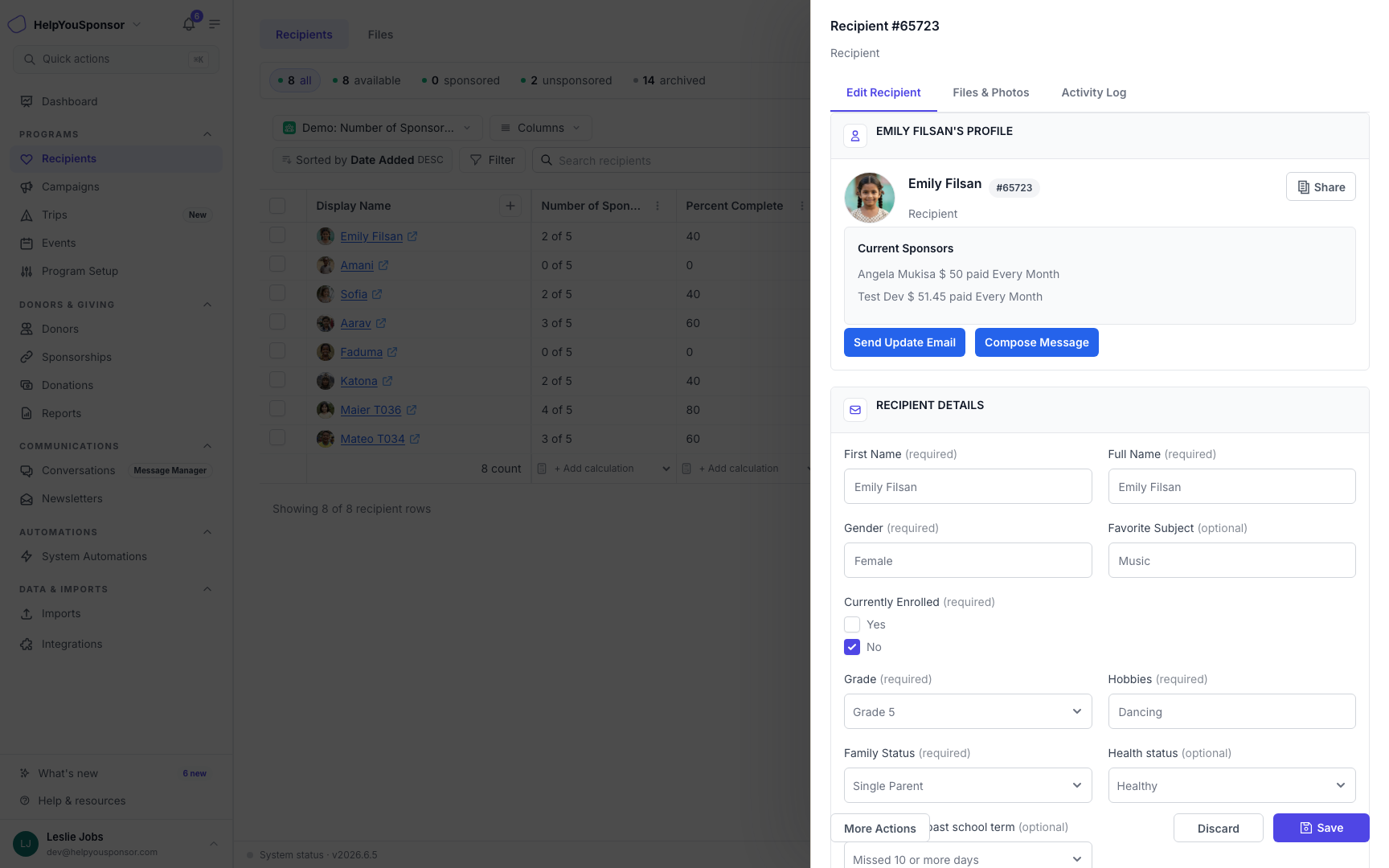
Open an existing recipient when you need to update profile details, manage files, review activity, or work on tasks connected to that recipient.

<figure><img src="/files/OliGpDUJ8HvobMMSYUAC" alt=""><figcaption><p>The recipient drawer lets you edit recipient details and access related tabs such as files and activity.</p></figcaption></figure>

Depending on your permissions and enabled features, the recipient drawer can include:

* **Edit Recipient** for profile and program fields
* **Files & Photos** for recipient images and uploads
* **Activity Log** for recipient-related activity history
* **Tasks** for task work connected to the recipient
* **More Actions** for notes, moving the recipient, archiving, restoring, or deleting
* **Report** when archived form/report history is available

The edit form can also include recipient visibility options, such as hiding the recipient from the sponsorship page, and featured-recipient options when the program supports them.

## Work With Selected Recipients

Select recipients when you need to take action on more than one record. Depending on your permissions, selected-recipient actions can include:

* bulk editing recipient fields
* moving recipients to another compatible program
* archiving recipients
* syncing selected recipients to QuickBooks when the integration is enabled

When you select all recipients on the current page, HelpYouSponsor may offer a second option to select all matching recipients in the current view. Review the selected count before running a bulk action.

## Review Archived Recipients

Use **Archived** when you need to review recipients that are no longer active in the main table. Archived recipients can be restored when your role allows it. Permanent delete actions may also be available for archived recipients, so use delete only when your organization is ready to remove those records.

Archiving a recipient can affect sponsorship relationships and recurring payments, so review the confirmation message before completing the action.

## Use the Files Tab

When you are working inside a specific program, the page can include a **Files** tab next to **Recipients**. Use it when you need to review uploaded files connected to recipients in that program.

See [File Management and Deleted File History](/guides/core-features/recipient-management/file-management-and-deleted-file-history.md) for the file workflow.

## Permissions

Your role controls what you can see and do on the Recipients table. You may not see every action described here. Program access, add recipient, manage form, manage program, import, export, bulk edit, move, archive, restore, delete, reports, activity logs, tasks, and integrations can all be permission-gated.

## Related Guides

* [Add Recipient](/guides/core-features/recipient-management/add-recipient.md)
* [File Management and Deleted File History](/guides/core-features/recipient-management/file-management-and-deleted-file-history.md)
* [Program Forms](/guides/core-features/program-management/program-forms.md)
* [Program Settings](/guides/core-features/program-management/program-settings.md)
* [Sponsorships Table](/guides/core-features/sponsorship-management/sponsorships-table.md)
* [Recipients Service Item](/guides/advanced-features/integrations/quickbooks/recipients-service-item.md)